



Leitfaden für buddhistische Kunstsammlungen: Bauen Sie mit Zuversicht auf
Leitfaden für buddhistische Kunstsammlungen: Bauen Sie mit Zuversicht auf
Eine buddhistische Kunstsammlung ist definiert als eine kuratierte Gruppe von Objekten, Skulpturen und Gemälden, die in den visuellen Traditionen des Buddhismus verwurzelt sind und sich über einen großen Zeitraum erstrecken 2.500 Jahre Geschichte vom indischen Subkontinent bis nach Ost- und Südostasien. Dieser Leitfaden zum Aufbau buddhistischer Kunstsammlungen deckt die vier Säulen ab, die jeder ernsthafte Sammler beherrschen muss: regionale Stile, Authentifizierung, ikonografische Bedeutung und respektvolle Präsentation.
Ob Sie Ihre erste kambodschanische Bronze erwerben oder in tibetische Thangkas expandieren, die Entscheidungen, die Sie frühzeitig treffen, prägen die langfristige Tiefe und Integrität Ihrer Sammlung. Authentizität, Herkunft und kulturelle Sensibilität sind keine optionalen Überlegungen. Sie sind das Fundament.
Was sind die wichtigsten Stile und regionalen Traditionen in der buddhistischen Kunst?
Markante regionale Stile definieren die buddhistische Kunst mehr als jede einzelne einheitliche Ästhetik. Jede Tradition spiegelt lokale Materialien, religiöse Schwerpunkte und historischen Kontext wider. Das Erkennen dieser Unterschiede ist die erste Fähigkeit, die ein Sammler braucht.
Die wichtigsten Traditionen gliedern sich wie folgt:
- Indisch: Steinschnitzereien von Orten wie Sanchi und Mathura begründeten die frühesten Buddha-Bilder. Die indische buddhistische Kunst entwickelte sich parallel zu hinduistischen Traditionen und teilte ein ikonografisches Vokabular, darunter Lotusthrone, Heiligenscheine und Handgesten, sogenannte Mudras.
- Tibetisch: Die tibetische tantrische Kunst zeigt komplexe vielarmige Gottheiten, zornige Beschützer und reich geschichtete Thangka-Gemälde. Blattgold, mineralische Pigmente und präzise ikonometrische Proportionen sind Markenzeichen dieser Tradition.
- Chinesisch: Die chinesische buddhistische Kunst reicht von monumentalen Höhlenskulpturen in Dunhuang und Yungang bis hin zu zarter Keramik aus der Song-Dynastie. Die Ästhetik nahm konfuzianische und taoistische Einflüsse auf und erzeugte eine deutlich ostasiatische Bildsprache.
- Südostasiatisch: Thailand, Kambodscha, Indonesien, Sri Lanka, und Vietnam stellten jeweils Bronze- und Steinskulpturen mit regional spezifischen Gesichtszügen, Kronenstilen und Mudras her. Khmer-Kunst aus Kambodscha, ist zum Beispiel an seinen heiteren, breiten Gesichtern und aufwendigen Kopfbedeckungen zu erkennen.
Profi-Tipp: Beginnen Sie mit einer regionalen Tradition und vertiefen Sie diese, bevor Sie sie erweitern. Eine konzentrierte Sammlung thailändischer Bronzebuddhas erzählt eine klarere Geschichte als eine verstreute Mischung aus nicht zusammenhängenden Stücken aus fünf Ländern.
Moderne buddhistische Kunst verbindet traditionelle Ikonographie mit zeitgenössischen Bewegungen. Künstler wie Thawan Duchanee, bekannt für sein Friedensmandala, und Rabin Mondal, dessen Serie „Abstract Buddha“ Mitte des 20. Jahrhunderts in Südasien entstand, zeigen, wie sich die Tradition weiterentwickelt. Sammler, die neben Antiquitäten auch ein oder zwei moderne Werke einbeziehen, schaffen eine Sammlung mit historischem Spektrum.
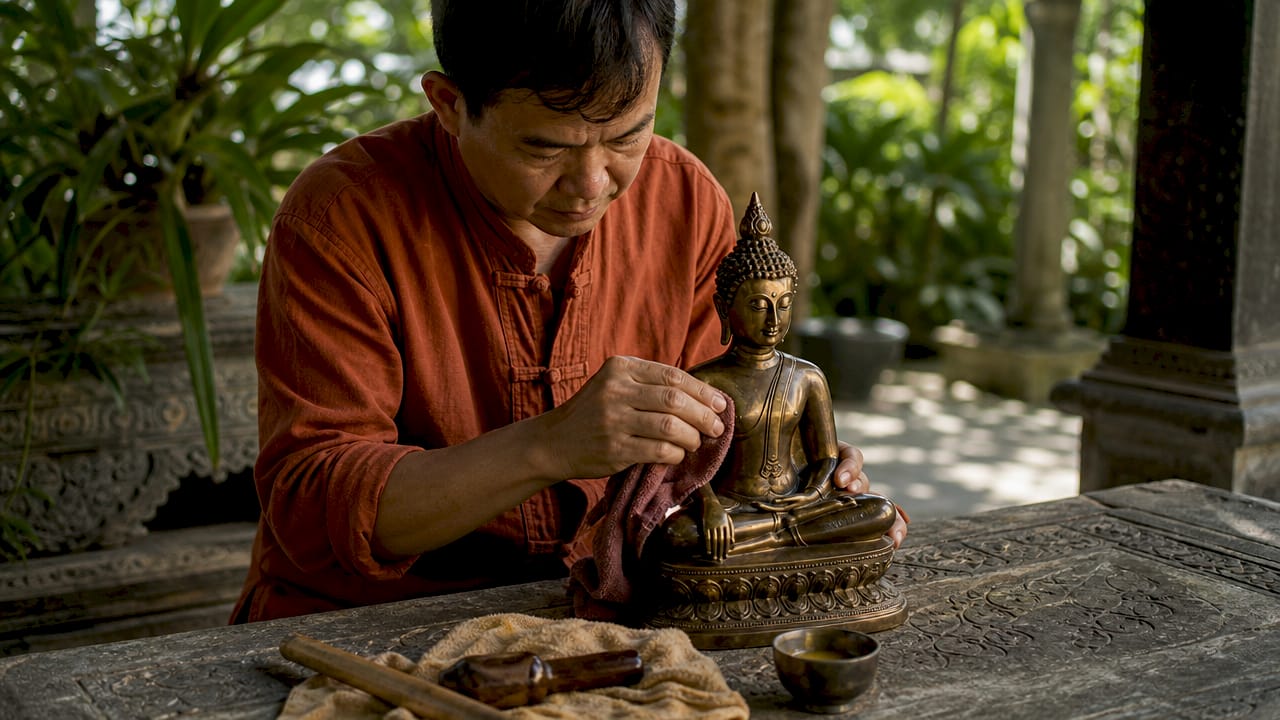
Das verstehen Mahayana-Kunsttradition ist besonders nützlich für Sammler, die es auf chinesische, tibetische oder japanische Werke abgesehen haben, da die Mahayana-Ikonographie Bodhisattvas wie Avalokiteshvara und Manjushri vorstellt, die in den Theravada-Traditionen nicht vorkommen.
Wie man buddhistische Kunstwerke authentifiziert und deren Herkunft überprüft
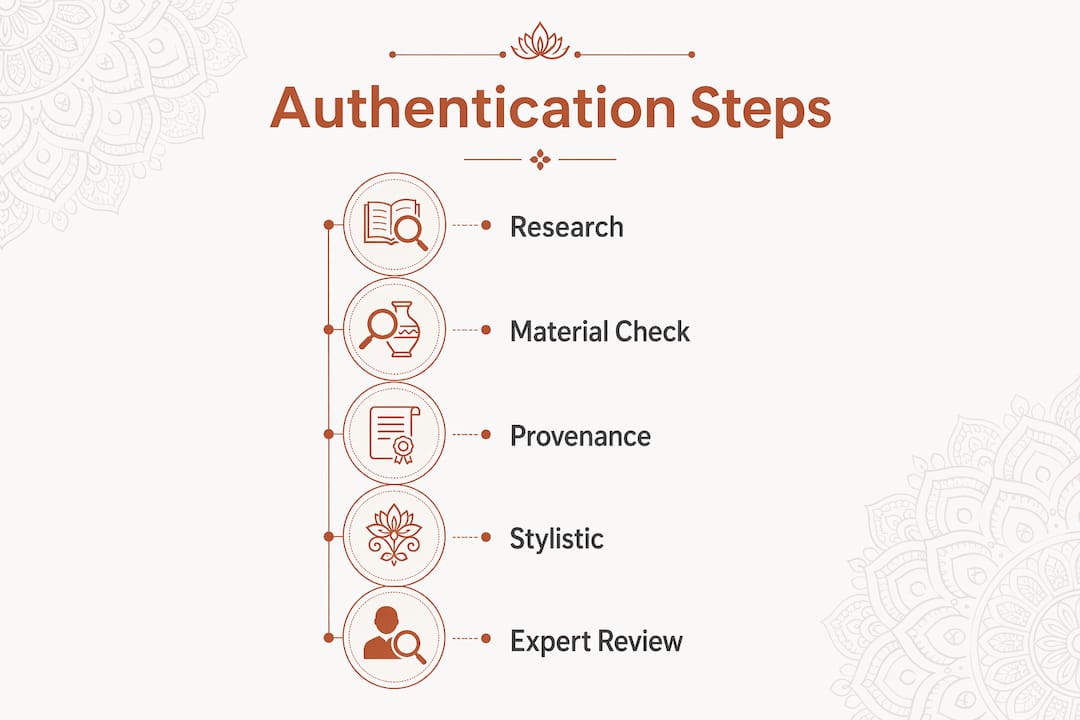
Authentifizierung ist die wichtigste Fähigkeit beim Aufbau einer seriösen Sammlung. Ein falsch zugeordnetes Stück verliert sowohl kulturellen Wert als auch Wiederverkaufswert. Der Prozess umfasst vier verschiedene Schritte.
-
Materialanalyse. Authentische antike Bronzen weisen spezifische Legierungszusammensetzungen auf, die ihrer Region und Zeit entsprechen. Kambodschanische Bronzen verwenden typischerweise eine Bronze mit hohem Zinngehalt, während thailändische Stücke oft einen Bleigehalt aufweisen. Steinskulpturen aus Indien oder Sri Lanka weisen Verwitterungsmuster auf, die in modernen Fälschungen nicht überzeugend nachgebildet werden können. Authentifizierung buddhistischer Kunst setzt auf Materialanalyse, stilistische Konsistenz, Provenienzdokumentation und Zustandsbewertung.
-
Stilistische Kontinuität. Jede regionale Tradition hat dokumentierte ikonometrische Regeln. Ein thailändischer Buddha aus der Sukhothai-Zeit hat eine Flammen-Ushnisha, ein ovales Gesicht und einen besonderen Gewandbehang. Abweichungen von diesen Konventionen sind ein Warnsignal. Studieren Sie Auktionskataloge von Christie’s und Sotheby’s, um Ihr Auge anhand dokumentierter Beispiele zu kalibrieren.
-
Provenienzdokumentation. Eine klare Eigentumsgeschichte, idealerweise rückverfolgbar bis vor 1970 (UNESCO-Kulturgut-Übereinkommen), erhöht sowohl das Authentizitätsvertrauen als auch die rechtliche Stellung deutlich. Fordern Sie alle verfügbaren Unterlagen an, bevor Sie ein Stück über einem bescheidenen Preisschwellenwert kaufen.
-
Expertenbewertung. Beauftragen Sie bei bedeutenden Ankäufen eine unabhängige Schätzung durch einen Spezialisten für asiatische Kunst. Museumskuratoren, Kunsthistoriker von Universitäten und etablierte Händler wie die von HDAsianArt können qualifizierte Gutachter bereitstellen oder empfehlen.
Profi-Tipp: Lernen Datum antike thailändische Buddha-Bilder Der Stil „nach Punkt“ ist eine der schnellsten Möglichkeiten, Vertrauen in die Authentifizierung aufzubauen. Die thailändische Kunst ist gut dokumentiert und ein hervorragendes Übungsgelände für Sammler, die sich mit asiatischen Antiquitäten noch nicht auskennen.
Zu den gängigen Fälschungen gehören Gussharzstücke mit künstlicher Patina, moderne, mit Säure künstlich gealterte Bronzen und zusammengesetzte Stücke, die aus Fragmenten unterschiedlicher Herkunft zusammengesetzt sind. Kaufen Sie niemals ein Stück ohne Angaben zur Herkunft, wenn der geforderte Preis hoch ist.
Welche kulturellen und symbolischen Bedeutungen sollten Sammler verstehen?
Die buddhistische Ikonographie ist eine visuelle Sprache. Wenn Sie es richtig lesen, ändert sich die Art und Weise, wie Sie Ihre Sammlung auswählen, anzeigen und besprechen.
Buddhistische Kunst umfasst Darstellungen von Gautama Buddha, Bodhisattvas, tantrischen Gottheiten, Mandalas und Ritualobjekten wie Vajras, Glocken und Stupas. Jedes Element hat eine spezifische Bedeutung, die mit den buddhistischen Lehren über das Erwachen verbunden ist.
Wichtige symbolische Kategorien, die jeder Sammler kennen sollte:
- Mudras: Handgesten vermitteln bestimmte Bedeutungen. Das Bhumisparsha Mudra (Erdberührungsgeste) stellt den Moment der Erleuchtung Buddhas dar. Das Dhyana Mudra (Meditationsgeste) signalisiert meditative Versenkung. Eine falsche Identifizierung von Mudras führt zu einer falschen Zuordnung von Zeitraum und Funktion.
- Bodhisattvas: Bodhisattvas werden mit Kronen und Juwelen dargestellt, was ihren nahezu erleuchteten Status anzeigt. Attribute wie Bücher identifizieren Manjushri (Weisheit) und Schwerter identifizieren Prajnaparamita. Regionale Unterschiede dieser Attribute sind für die Datierung und Zuschreibung von Bedeutung.
- Mandalas und Ritualgegenstände: Mandalas repräsentieren die kosmische Ordnung und werden in der tibetischen und japanischen Vajrayana-Praxis verwendet. Vajras (Donnerkeilzepter) und Glocken erscheinen als paarweise Ritualgeräte. Wer diese Objekte sammelt, ohne ihre Funktion zu verstehen, riskiert, heilige Werkzeuge als Dekorationsgegenstände zu behandeln.
- Schutzgottheiten: Zornige Gestalten wie Mahakala und Yamantaka sind Schutzgottheiten, keine Dämonen. Ihr wildes Aussehen dient einem bestimmten rituellen Zweck. Werden sie falsch dargestellt, etwa indem sie in einer Hierarchie unter anderen Figuren platziert werden, die sie dominieren sollten, signalisiert dies einem informierten Betrachter mangelndes Verständnis.
„Die spirituelle Funktion eines buddhistischen Kunstwerks ist untrennbar mit seiner ästhetischen Form verbunden. Ein Sammler, der versteht, warum ein Stück hergestellt wurde, sieht weit mehr als jemand, der nur sieht, wie es aussieht.“
Respektvolle Darstellung bedeutet, den ursprünglichen religiösen Kontext zu verstehen. In den meisten buddhistischen Traditionen gilt es beispielsweise als respektlos, eine heilige Altarfigur auf den Boden zu stellen. Höhe, Ausrichtung und Gruppierung sind alle von Bedeutung.
Wie man eine buddhistische Kunstsammlung respektvoll kuratiert und ausstellt
Beim Kuratieren wird das Sammeln zum Genießertum. Die physische Anordnung Ihrer Sammlung vermittelt Ihr Verständnis des Materials.
-
Richten Sie eine Anzeigehierarchie ein. Buddha-Figuren nehmen traditionell in jeder Gruppierung die höchste Position ein. Bodhisattvas und Schutzgottheiten werden auf niedrigeren Ebenen platziert. Das Befolgen dieser Konvention zeigt kulturelle Kompetenz und schafft eine visuell kohärente Anordnung. Respektvolle Ausstellung buddhistischer Kunst erfordert eine angemessene Platzierung und ein Verständnis der spirituellen Funktion jedes Stücks.
-
Kontrollieren Sie die Beleuchtung sorgfältig. Streiflicht von der Seite bringt Oberflächendetails auf Bronze- und Steinskulpturen zum Vorschein. Vermeiden Sie direkte Deckenstrahler, die Reliefschnitzereien abflachen. Bei Thangka-Gemälden verhindert UV-gefilterte Beleuchtung den Pigmentabbau. Warm getönte LEDs mit 2.700–3.000 Kelvin eignen sich gut für die meisten Bronze- und Steinstücke.
-
Gruppieren Sie nach Tradition oder Thema. Eine Gruppe von Theravada-Skulpturen aus Thailand, Kambodscha, und Sri Lanka erstellt eine vergleichende Studie. Durch die Gruppierung nach ikonografischen Typen, wie z. B. allen Avalokiteshvara-Figuren, entsteht eine thematische Studie. Beide Ansätze sind gültig. Durch zufälliges Mischen entsteht visuelles Rauschen.
-
Speichern Sie, was Sie nicht anzeigen. Richtige Lagerung für antike Stein- und Bronzeskulpturen erfordert eine stabile Luftfeuchtigkeit, kontrollierte Temperatur und eine säurefreie Polsterung. Schwankende Luftfeuchtigkeit verursacht Bronzekrankheiten in Metallteilen und Risse in Steinen. Ein klimatisierter Lagerschrank ist für jeden ernsthaften Sammler eine lohnende Investition.
-
Dokumentieren Sie jedes Stück. Führen Sie für jedes Werk einen schriftlichen Katalog mit Fotos, Abmessungen, Herkunftsangaben und Erwerbungsdetails. Dieser Datensatz unterstützt die Versicherung, zukünftige Authentifizierung und einen eventuellen Weiterverkauf oder eine Schenkung.
Profi-Tipp: Konsultieren Sie den Leitfaden von HDAsianArt zur Ausstellung religiöser buddhistischer Kunst, bevor Sie einen Neuankauf veranlassen. Kleine Platzierungsentscheidungen haben großes kulturelles Gewicht.
Wichtige Erkenntnisse
Der Aufbau einer bedeutungsvollen Sammlung buddhistischer Kunst erfordert die gleiche Beachtung regionaler Kenntnisse, strenger Authentifizierung, ikonografischer Kompetenz und respektvoller Kuratierung.
| Punkt | Details |
|---|---|
| Lernen Sie zuerst regionale Stile | Identifizieren Sie die Tradition vor dem Erwerb. Indische, tibetische, chinesische und südostasiatische Stile unterscheiden sich in Materialien, Ikonographie und religiösem Kontext. |
| Authentifizieren Sie sich vor dem Kauf | Überprüfen Sie die Materialzusammensetzung, die stilistische Konsistenz und die Herkunftsdokumentation. Holen Sie für hochwertige Stücke eine Expertenbewertung ein. |
| Lesen Sie die Ikonographie | Mudras, Bodhisattva-Attribute und Ritualgegenstände haben jeweils eine spezifische Bedeutung. Eine Fehlinterpretation führt zu falschen Zuordnungen und schlechten Darstellungsentscheidungen. |
| Anzeige mit kulturellem Bewusstsein | Platzieren Sie Buddha-Figuren an der höchsten Position. Verwenden Sie UV-gefiltertes Licht für Gemälde und Streiflicht für Skulpturen. |
| Ordnungsgemäß aufbewahren und dokumentieren | Stabile Luftfeuchtigkeit und Temperatur schützen Bronze und Stein. Ein schriftlicher Katalog mit Fotos unterstützt die Versicherung und zukünftige Authentifizierung. |
Was ich aus den Jahren mit buddhistischen Kunstsammlungen gelernt habe
Die Sammler, die ich am meisten respektiere, sind nicht diejenigen mit dem größten Budget. Sie sind diejenigen, die Zeit mit Lernen verbracht haben, bevor sie Geld ausgegeben haben. Buddhistische Kunst belohnt Geduld auf eine Art und Weise wie kaum ein anderes Sammelgebiet.
Der Markt für südostasiatische Antiquitäten hat sich im letzten Jahrzehnt erheblich verändert. Kambodschanische Khmer-Bronzen und thailändische Stücke aus der Sukhothai-Zeit, die vor zwanzig Jahren unterbewertet waren, erregen heute große Aufmerksamkeit in großen Auktionshäusern. Dieser Wandel geschah, weil sich eine Generation von Sammlern die Zeit nahm, zu verstehen, was sie sahen. Stücke aus Theravada-buddhistische Skulpturentraditionen Insbesondere sind sie vom Spezialinteresse zum Mainstream-Sammlerfokus übergegangen.
Die Herausforderung, die ich am häufigsten sehe, sind Sammler, die Ästhetik über Authentizität stellen. Ein schönes Stück ohne Herkunft ist eine Belastung, kein Vermögenswert. Die Kulturgutgesetze, die Antiquitäten aus der Zeit vor 1970 regeln, sind real und wichtig. Ich sage neuen Sammlern immer: Kaufen Sie zuerst die Geschichte, dann die Schönheit.
Die Belohnung ist echt, wenn man es richtig macht. Eine gut authentische Khmer-Bronze aus dem 12. Jahrhundert oder eine dokumentierte thailändische vergoldete Holzfigur aus dem 15. Jahrhundert verbindet Sie mit einer lebendigen Tradition, die sich über zweieinhalb Jahrtausende erstreckt. Diese Verbindung unterscheidet eine Kollektion von einer Dekoration.
— James, HDAsianArt.com
HDAsianArt: eine Ressource für ernsthafte Sammler
HDAsianArt ist auf antike und traditionelle buddhistische Skulpturen spezialisiert Kambodscha, Thailand, Indonesien, Sri Lanka, Vietnam und darüber hinaus. Jedes Stück im Katalog wird individuell von Spezialisten mit direkten Kenntnissen der asiatischen Kunstgeschichte recherchiert, fotografiert und beschrieben.
Sammler auf allen Ebenen, von denjenigen, die ihre erste Bronze erwerben, bis hin zu denjenigen, die Bestände von Museumsqualität aufbauen, finden dokumentierte, authentische Werke bei HDAsianArt. Jede Auflistung enthält Herkunftshinweise, Zustandsdetails und Expertenbeschreibungen. Der weltweite versicherte DHL-Versand deckt jede Bestellung ab. Für Sammler, die vertrauensvoll bauen möchten, ist der Katalog ein praktischer Ausgangspunkt, der auf echtem Fachwissen basiert.
FAQ
Was ist buddhistische Kunst?
Buddhistische Kunst ist eine etwa 2.500 Jahre alte visuelle Tradition, die ihren Ursprung auf dem indischen Subkontinent hat und sich über ganz Asien verbreitet. Es umfasst Skulpturen, Gemälde, Mandalas und Ritualgegenstände, die Buddha, Bodhisattvas und tantrische Gottheiten darstellen.
Woher weiß ich, ob eine buddhistische Skulptur authentisch ist?
Authentische Stücke weisen eine der Region und Zeit entsprechende Materialzusammensetzung, stilistische Genauigkeit und dokumentierte Herkunft auf. Beauftragen Sie bei bedeutenden Ankäufen ein unabhängiges Gutachten mit einem Spezialisten für asiatische Antiquitäten.
Was sind die regionalen Stile mit den meisten Sammlerstücken?
Tibetische Thangkas, Khmer-Bronzen aus Kambodscha, Skulpturen aus der thailändischen Sukhothai-Zeit und indische Steinschnitzereien gehören zu den am häufigsten gesammelten Skulpturen. Jede Tradition verfügt über gut dokumentierte ikonometrische Standards, die die Authentifizierung unterstützen.
Wie soll ich buddhistische Kunst zu Hause ausstellen?
Platzieren Sie Buddha-Figuren an der höchsten Stelle einer beliebigen Gruppierung. Verwenden Sie UV-gefiltertes Licht für Gemälde und Streiflicht für Skulpturen. Befolgen Sie die etablierten Platzierungskonventionen, um die spirituelle Funktion jedes Stücks zu respektieren.
Was ist die Regel von 1970 im buddhistischen Kunstsammeln?
Das UNESCO-Übereinkommen über Kulturgüter aus dem Jahr 1970 ist der Standardmaßstab für die Provenienz auf dem Antiquitätenmarkt. Stücke mit dokumentierter Besitzgeschichte vor 1970 haben einen deutlich höheren rechtlichen Status und werden von großen Auktionshäusern und Museen bevorzugt.
Empfohlen
- Wie man religiöse buddhistische Kunst respektvoll präsentiert – HD Asian Art
- Kunsttradition des Mahayana-Buddhismus: Ein visueller Leitfaden – HD Asian Art
- Theravada-buddhistische Skulptur für Kunstwissenschaftler erklärt – HD Asian Art
- HD Asian Art | Antike asiatische Kunst | Buddhistische Statuen | Hinduistische Skulpturen
